


Sahara · 5 min read
The desert changes color all day, but the real show happens at the edges of the day. At sunset and sunrise, the dunes of the Sahara turn gold, orange and red, and the sky can go from soft yellow to deep fire in a few minutes. Here is how to make the most of it.
Sunset: the golden hour on the dunes
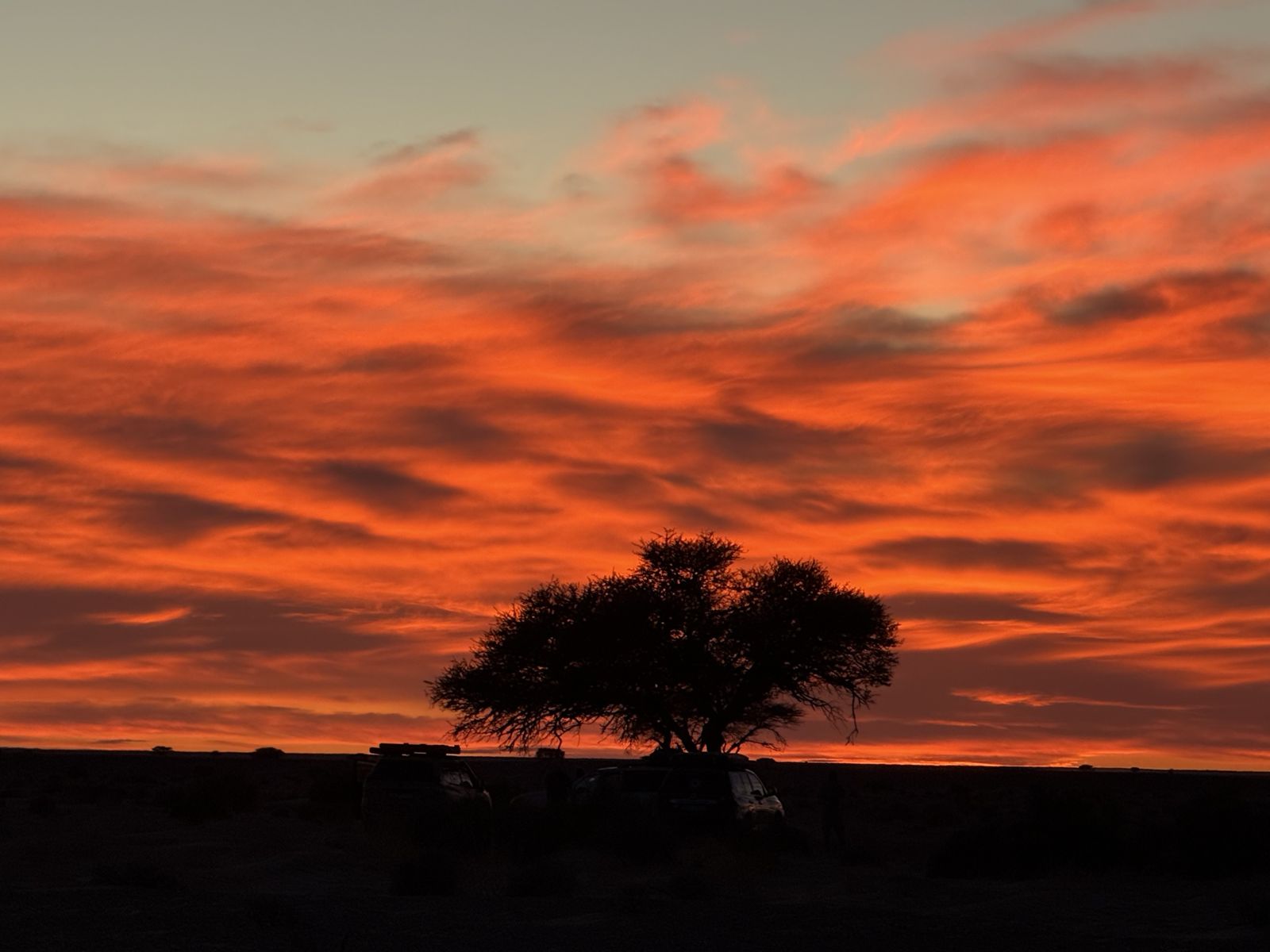
About an hour before the sun goes down, the light becomes warm and low. The shadows on the dunes get longer and the ridges of Erg Chebbi stand out sharply. This is the best time for a camel ride or a walk up a dune. Many of our guests also love sunset on the open desert plains (the hamada), where a single acacia tree against an orange sky makes an unforgettable picture.
Sunrise: worth waking up for
Sunrise is quieter than sunset. The camp is still asleep, the air is cool and the sand is smooth after the night wind. Climb the nearest high dune about 30 minutes before sunrise and wait for the first light to appear on the horizon.
Stay after the sun has set. The sky often becomes even more beautiful.
What makes each sunset different
- Clear sky: soft gold and pink tones, perfect for photos of the dunes.
- Scattered clouds: the most dramatic sunsets, with clouds lit in red and orange.
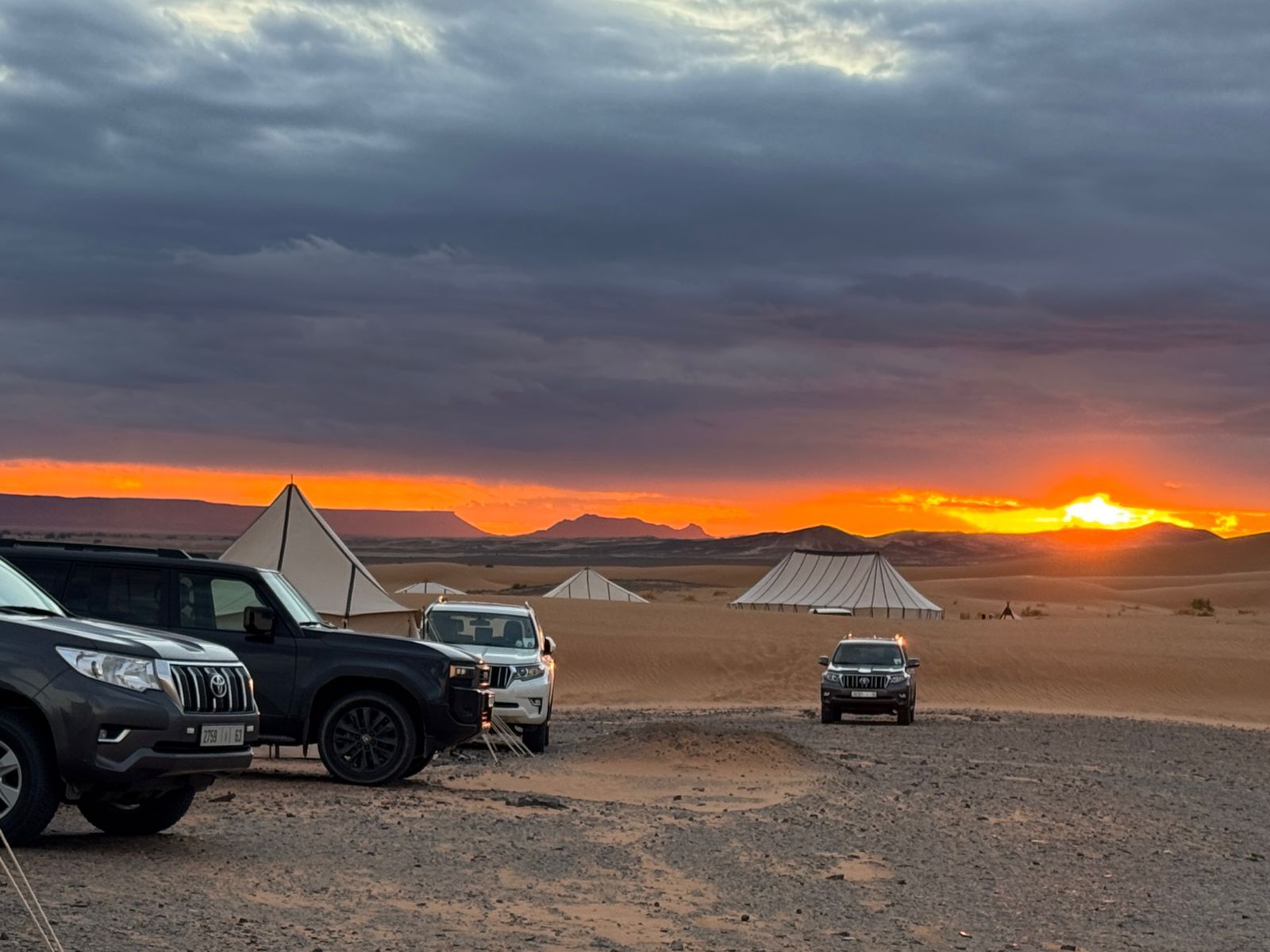
- Stormy sky: dark clouds with a thin line of fire on the horizon, rare and spectacular.
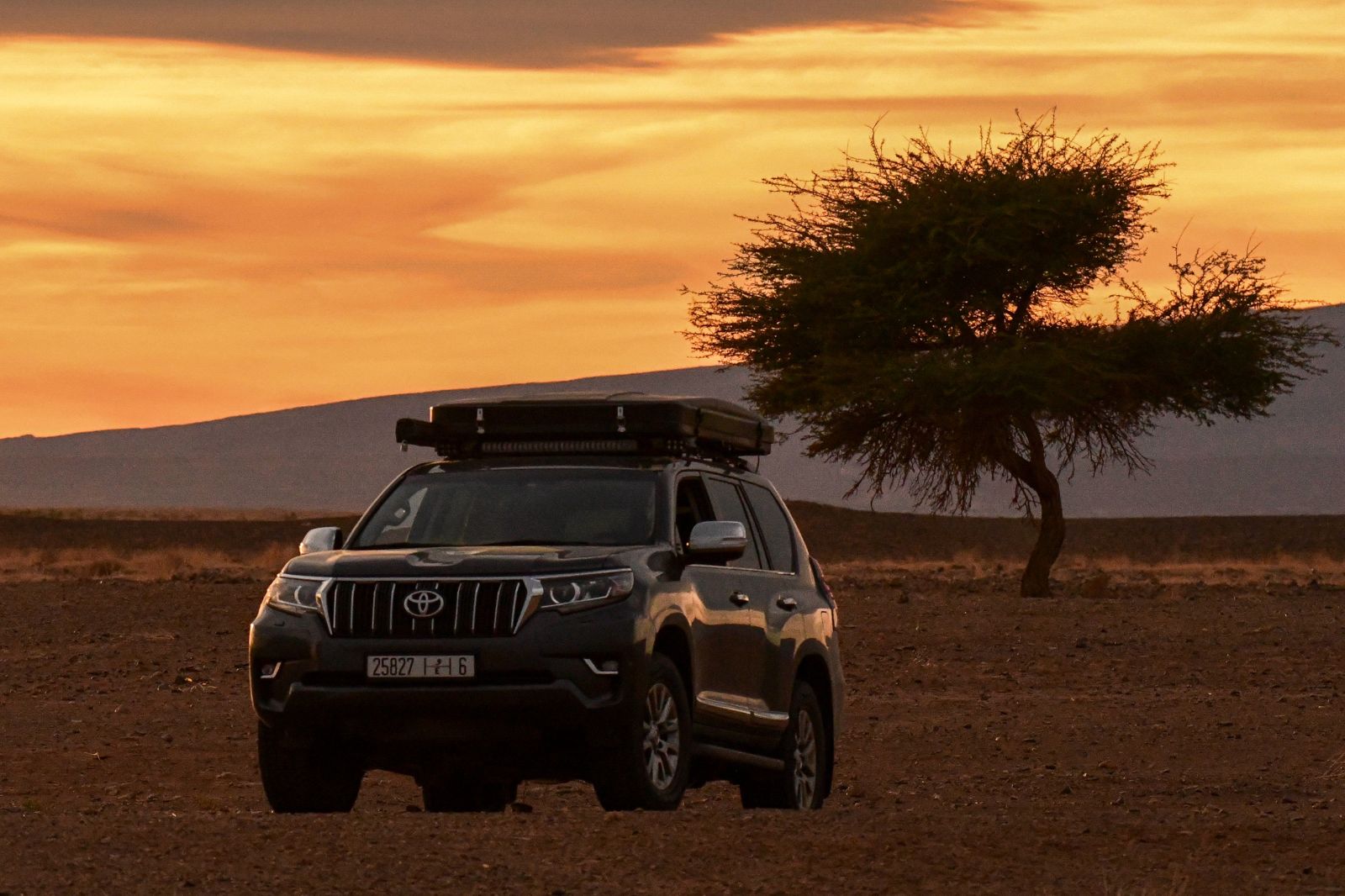
Photo tips
- Shoot in the direction of the light for silhouettes of camels, trees and people.
- Turn around: the dunes behind you are often lit in deep gold.
- Protect your phone or camera from sand with a small bag.
- Stay after the sun has set; the sky often becomes even more colorful.
Related tours
Keep reading
Private tours · Local drivers
Your Sahara is waiting
Our drivers know the best spots for sunset on the way to the camp and the best dunes for sunrise.
Plan my desert trip